


There are places on Earth that defy easy description — landscapes so singular, so astonishing in their scale and abundance, that photographs never quite capture the reality of standing within them. The Ngorongoro Crater is one such place. Formed nearly three million years ago when a massive volcano collapsed inward upon itself, this vast caldera in northern Tanzania has evolved into what many wildlife experts consider the greatest natural wildlife enclosure on the planet. Ngorongoro Crater safari tours deliver an experience unlike anything else in Africa: a self-contained Eden where extraordinary concentrations of wildlife roam a breathtaking volcanic bowl, visible from rim to floor in a single sweeping glance.
For travelers dreaming of Africa — of lions resting in golden grass, black rhinos grazing in the morning mist, and flamingos turning alkaline lakes pink — the Ngorongoro Crater is not simply a destination. It is a revelation.
Understanding the Ngorongoro Crater: Nature’s Masterpiece
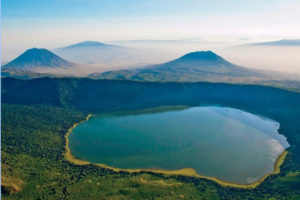
The Ngorongoro Crater is the world’s largest intact, unflooded volcanic caldera. Stretching approximately 19 kilometres across and plunging some 600 metres from rim to floor, it covers a surface area of roughly 260 square kilometres. The crater floor encompasses a mosaic of habitats — open grassland, acacia woodland, swamps, a seasonal lake, and a freshwater spring — all of which combine to sustain a remarkable density of wildlife year-round.
Unlike the vast plains of the Serengeti, where animals roam freely across enormous distances, the crater’s natural walls create a semi-enclosed ecosystem. Most of the wildlife residing within the crater remains there permanently, sustained by the rich resources the caldera provides. This concentration effect is what makes Ngorongoro Crater safari tours so consistently rewarding: you do not spend days tracking animals across open terrain. Instead, you descend into a living theatre where wildlife surrounds you on every side.
The Ngorongoro Conservation Area, designated a UNESCO World Heritage Site in 1979, encompasses far more than the crater itself. It includes the Olmoti and Empakaai craters, the vast Serengeti plains to the west, and the remote Olduvai Gorge — one of the most important paleoanthropological sites on Earth, where some of the earliest evidence of human evolution has been discovered.
Wildlife of the Ngorongoro Crater: What You Will See
The crater floor supports an estimated 25,000 to 30,000 large mammals at any given time. The diversity and density of wildlife here is extraordinary, and Ngorongoro Crater safari tours consistently rank among Africa’s most productive for game viewing.
The Big Five — All in One Place
The Ngorongoro Crater is one of the finest locations in Africa to see all of the Big Five — lion, leopard, elephant, buffalo, and black rhino — within a single day’s game drive. This is a genuinely rare achievement on the continent.
The crater’s lion population is particularly impressive. Prides here are large, confident, and highly visible on the open grasslands. The enclosed geography means lions are frequently spotted resting near the road or stalking prey in full view. Leopards, naturally elusive, favour the forested crater walls and are regularly sighted by patient observers.
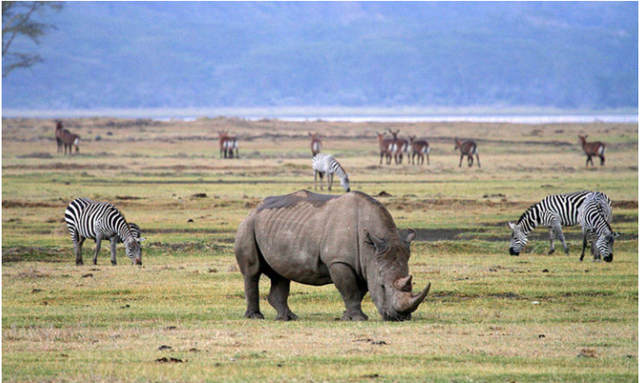
Most significantly, the Ngorongoro Crater holds one of Africa’s last viable populations of critically endangered black rhino. Approximately 25 to 30 individuals roam the crater floor, and sightings — though never guaranteed — are far more likely here than almost anywhere else on the continent. Encountering a black rhino in the wild, grazing serenely in the morning light, is one of the most moving wildlife experiences Africa can offer.
The Lakes: Flamingos and Waterbirds
Lake Magadi, the shallow alkaline lake at the crater’s southern end, turns vivid pink during the dry season as thousands of lesser and greater flamingos gather to feed. The lake also attracts hippos, which lounge in the shallows throughout the year, and a remarkable variety of waterbirds including pelicans, spoonbills, herons, and Egyptian geese. For birdwatchers, the crater is a destination in its own right, with over 500 species recorded within the conservation area.
Predators and the Hunt
Beyond lions, the crater supports healthy populations of spotted hyenas — arguably the most successful large predator in the ecosystem. Hyena clans here are bold, numerous, and fascinating to observe, particularly at dawn when they return from nocturnal hunts. Cheetahs move through the crater, though the dense lion and hyena populations mean they often seek the higher ground of the crater rim. Serval cats, golden jackals, bat-eared foxes, and African wild cats add further texture to the predator community.
The Wildebeest and the Herds
Unlike the Serengeti’s migrating masses, the wildebeest of the Ngorongoro Crater are permanent residents. They share the grasslands with zebras, Thomson’s and Grant’s gazelles, eland, hartebeest, and warthogs in vast, peacefully grazing aggregations that paint the crater floor in shades of grey and gold. Buffalo herds, often numbering in the hundreds, are a constant and impressive presence near the swamps and along the crater’s northern edge.
Planning Your Ngorongoro Crater Safari
When to Visit
The Ngorongoro Crater can be visited and enjoyed year-round, and this is one of its great advantages over more seasonally dependent safari destinations. However, timing your visit thoughtfully will enhance your experience significantly.
The dry season — June through October — offers the clearest skies, best road conditions on the crater floor, and the most reliable wildlife viewing as animals concentrate around permanent water sources. This period also coincides with the Great Migration passing through the greater Serengeti ecosystem, making it ideal for combining both destinations in one itinerary.
The wet season — November through May — brings lush green landscapes, dramatically reduced tourist numbers, and the arrival of migratory bird species that enrich the crater’s birdlife enormously. The short rains of November and December are generally manageable. The heavy rains of March and April can make some crater floor tracks challenging, but the rewards of near-solitary game viewing and vivid green scenery are considerable.
How to Get There
Most visitors to the Ngorongoro Crater arrive overland from Arusha, Tanzania’s northern safari hub, via a scenic three-to-four-hour drive along the main northern circuit road. Alternatively, small charter flights can land at Manyara Airstrip, reducing transfer time significantly. The crater is a natural centrepiece of Tanzania’s Northern Circuit, which typically links Tarangire National Park, Lake Manyara, the Serengeti, and Ngorongoro in a single, flowing itinerary.
Game Drive Logistics
Access to the crater floor is strictly regulated by the Ngorongoro Conservation Area Authority. All visitors must descend in a registered 4WD vehicle accompanied by a licensed guide. The number of vehicles permitted on the crater floor at any one time is controlled, which helps maintain an atmosphere of exclusivity compared to some of Africa’s more heavily trafficked parks.
Game drives typically begin at dawn when the morning mist rolls across the crater rim, creating an atmospheric and spectacular descent. Most operators offer full-day crater floor experiences with a bush picnic lunch, allowing you to maximise time in this remarkable environment. Evening descents are not permitted, so timing your arrival at the rim is important.
Where to Stay
Accommodation at the Ngorongoro Crater falls into two main categories: crater rim lodges and tented camps, and lodges located in the broader conservation area below the rim.
Crater rim lodges — including the legendary Ngorongoro Crater Lodge, the Serena, and &Beyond’s Ngorongoro Crater Lodge — perch dramatically on the caldera’s edge, offering extraordinary views across the crater from private verandas. Waking to morning mist filling the crater below, with wildlife already moving on the plains far beneath, is a genuinely magical experience available from these elevated properties.
Combining Ngorongoro with Tanzania’s Northern Circuit
The Ngorongoro Crater is most powerfully experienced as part of a broader Tanzania safari itinerary. A classic northern circuit of eight to twelve days might include:
- Tarangire National Park — famous for massive elephant herds and ancient baobab trees
- Lake Manyara National Park — renowned for tree-climbing lions and spectacular flamingo gatherings
- Ngorongoro Crater — two to three nights for a full crater experience and rim exploration
- Serengeti National Park — four to five nights timed to coincide with the Great Migration
This combination delivers one of the most complete and diverse wildlife itineraries available anywhere in the world.
Key Takeaways
- The Ngorongoro Crater is the world’s largest intact volcanic caldera — a UNESCO World Heritage Site teeming with 25,000 to 30,000 large mammals year-round.
- All of the Big Five can be seen in a single day — making this one of Africa’s most reliably productive game-viewing destinations.
- Black rhino sightings are more likely here than almost anywhere else in Africa — with 25 to 30 critically endangered individuals living permanently on the crater floor.
- The crater can be visited year-round — dry season (June–October) offers optimal conditions; the wet season (November–May) rewards visitors with lush scenery and solitude.
- Access is strictly regulated — all game drives require a licensed guide and a registered 4WD, preserving the crater’s exclusivity and ecological integrity.
- Crater rim lodges offer some of Africa’s most dramatic accommodation — waking above the clouds with a private view over the caldera is an experience without equal.
- The Ngorongoro Conservation Area extends far beyond the crater — Olduvai Gorge, Empakaai Crater, and the Ndutu plains all reward exploration.
- Combine Ngorongoro with the Serengeti and Tarangire for Tanzania’s definitive northern circuit safari experience.
Frequently Asked Questions
How long should I spend at the Ngorongoro Crater? A minimum of two nights at the crater rim is recommended, allowing for a full day on the crater floor without the pressure of arriving or departing the same day. Three nights permits a more leisurely experience, with time for a second descent or exploration of the broader conservation area, including Olduvai Gorge.
Is it possible to see the Big Five in one day at Ngorongoro? Yes — and this is one of the crater’s most remarkable qualities. While wildlife sightings are never guaranteed, the extraordinary density of animals within the caldera means that encountering lion, leopard, elephant, buffalo, and black rhino within a single full-day game drive is an achievable and regularly reported experience.
What is the best time of day to be on the crater floor? Early morning is universally regarded as the finest time on the crater floor. The mist clears as the sun rises, predators are most active, and the quality of light is spectacular for photography. Descending at dawn and spending the full day, including a bush picnic, before ascending in the late afternoon maximises your time in this extraordinary environment.
Can I walk in the Ngorongoro Crater? Walking on the crater floor is not permitted for safety reasons. However, guided walks are available on the crater rim and in other areas of the Ngorongoro Conservation Area, offering a wonderful perspective of the caldera from above and the chance to observe smaller wildlife and vegetation at close range.
Is the Ngorongoro Crater suitable for families with children? The crater is an excellent destination for families. The high density of wildlife means sightings are frequent and reliable — ideal for children with shorter attention spans than the wide-open plains sometimes demand. Most lodges welcome families warmly, and the educational value of visiting Olduvai Gorge and learning about human evolutionary history adds a fascinating dimension to a family safari.
How does Ngorongoro compare to a Serengeti safari? The two destinations are deeply complementary rather than competitive. The Serengeti offers vast open plains, the drama of the Great Migration, and a sense of limitless wilderness. Ngorongoro provides concentrated, highly reliable game viewing within a dramatic and enclosed landscape. Most experienced safari travelers recommend experiencing both, ideally within the same itinerary, to fully appreciate Tanzania’s extraordinary wildlife heritage.
Conclusion: Why Ngorongoro Crater Safari Tours Are Unmissable
The Ngorongoro Crater occupies a category entirely its own in the world of wildlife travel. It is not simply a safari destination — it is a geological wonder, a conservation triumph, and a wildlife spectacle that has been drawing explorers, naturalists, and dreamers to its ancient rim for over a century. To descend into the crater at dawn, to watch the mist lift from its floor as lions stretch in the morning sun and black rhinos move silently through the long grass, is to understand precisely why East Africa has captured the human imagination so completely and so enduringly.
Few places on Earth deliver so consistently on the promise of extraordinary wildlife encounters. Fewer still frame those encounters within scenery of such volcanic grandeur. The Ngorongoro Crater does both, effortlessly, every single day.
Whether you are visiting Tanzania for the first time or returning as a seasoned safari traveler, a Ngorongoro Crater safari tour deserves a central place in your itinerary. Plan carefully, arrive with patience, and descend with your senses fully open. The crater, in its timeless, unhurried way, will show you something you will spend the rest of your life trying to adequately describe to the people who were not there with you.