


Introduction
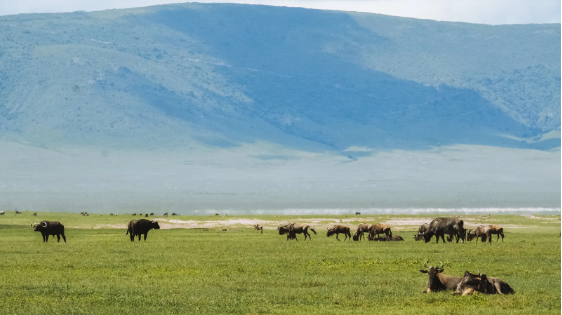
Imagine descending into a world untouched by time — a vast, ancient caldera where predator and prey share the same water hole, where black rhinos graze at dawn beneath a lavender sky, and where the sheer density of wildlife leaves even the most seasoned traveler speechless. This is the Ngorongoro Crater, one of Africa’s most remarkable natural wonders and arguably the single most wildlife-rich location on the entire continent.
Located in the Crater Highlands of northern Tanzania, the Ngorongoro Conservation Area spans approximately 8,288 square kilometers and is listed as both a UNESCO World Heritage Site and an IUCN Category II protected area. At its heart lies the Ngorongoro Crater — the world’s largest intact, unflooded volcanic caldera — stretching 19.2 kilometers across and plunging 600 meters deep. Within its walls lives a self-contained ecosystem of extraordinary concentration, home to an estimated 25,000 to 30,000 large animals representing some of Africa’s most iconic species.
A Ngorongoro Crater safari is not simply a game drive — it is a journey into a natural amphitheater that has functioned as a wildlife sanctuary for millennia. This guide covers everything you need to plan and experience your visit to the Ngorongoro Crater: its ecology and history, the wildlife you can expect to encounter, the best times to visit, accommodation options, practical travel tips, and much more.
The Geology and Ecology of Ngorongoro: A World Within a World
To truly appreciate the Ngorongoro Crater, it helps to understand how it came to be. Approximately two to three million years ago, a massive volcanic mountain — likely as tall as Kilimanjaro — erupted and collapsed inward, forming the enormous caldera that exists today. Unlike other volcanic calderas around the world, Ngorongoro has never been flooded by the ocean, allowing its interior to develop into a closed, self-sustaining ecosystem.
The crater floor sits at an elevation of approximately 1,800 meters above sea level and encompasses around 260 square kilometers of diverse habitats. These include open short-grass plains, highland forest along the crater walls, acacia woodlands, swamps fed by the Munge and Ngoitokitok springs, and the shallow, soda-rich Lake Magadi at the center. Each habitat type supports a distinct suite of species, creating remarkable biodiversity within a compact and accessible area.
The Ngorongoro Conservation Area is also one of the few protected areas in Africa where human habitation is permitted alongside wildlife. The semi-nomadic Maasai people have grazed their cattle in the highlands surrounding the crater for centuries, and their coexistence with wildlife remains one of the most compelling conservation stories on the continent.
Wildlife of the Ngorongoro Crater
The crater’s enclosed geography means that most large mammals are permanent residents rather than seasonal migrants, providing exceptional and reliable wildlife viewing year-round. Here is what you can expect to encounter.
The Big Five
The Ngorongoro Crater safari is one of the few places in Africa where you have a realistic chance of spotting all five of the Big Five in a single day.
Lions are the crater’s most visible predators. The resident population of approximately 60 to 70 lions is one of the most studied in the world. Due to the crater’s isolation, the lion prides here are genetically distinct from those on the surrounding plains — a fact that has drawn significant scientific interest. Sightings are frequent, and kills occur regularly enough that lucky visitors witness dramatic predator-prey interactions.
Leopards are present but elusive, often retreating into the dense forests that cloak the crater walls. Early morning drives near the forested rim offer the best opportunities for sightings.
Elephants descend into the crater in small numbers. The bulls here are known for their exceptional tusk size, as the isolated population has experienced less poaching pressure than elephants in more accessible regions.
Cape Buffalo roam the crater floor in large herds of several hundred individuals. They are commonly seen near swamps and water sources and form a primary prey base for the crater’s lions.
Black Rhinoceros represent perhaps the most iconic and emotionally significant sighting in the crater. Tanzania’s Ngorongoro hosts one of the last viable wild populations of critically endangered black rhinos on the continent, with between 20 and 30 individuals estimated within the conservation area. Spotting one of these rare giants in the early morning light is a privilege that few safari destinations can offer.
Beyond the Big Five
Spotted Hyenas are extraordinarily abundant in the crater, with a population exceeding 400 individuals. Contrary to their reputation as mere scavengers, Ngorongoro’s hyenas are highly capable hunters and are responsible for a significant portion of kills on the crater floor.
Flamingos congregate in thousands on the alkaline shores of Lake Magadi, forming shimmering pink bands visible from the crater rim. Lesser and greater flamingos are both present, creating one of Africa’s most photogenic wildlife scenes.
Hippos inhabit the Ngoitokitok swamp and hippo pool, one of the most popular stopping points for game drive vehicles. Dozens of individuals are typically visible wallowing and jostling for position throughout the day.
Cheetahs are present on the open crater floor but in smaller numbers than in the wider Serengeti ecosystem. When spotted, the unobstructed grassland offers superb photographic opportunities.
The crater is also home to golden jackals, bat-eared foxes, serval cats, mongoose, warthogs, zebras, wildebeest, eland, Grant’s gazelles, and Thomson’s gazelles, along with over 500 species of birds including kori bustards, secretary birds, martial eagles, and the endemic Hildebrandt’s francolin.
Best Time to Visit the Ngorongoro Crater
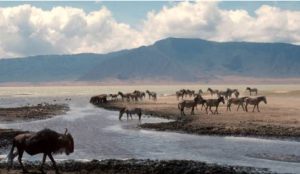
One of the crater’s great advantages is that it offers excellent wildlife viewing throughout the year, as its resident animal population does not undertake seasonal migrations. That said, certain months offer distinct advantages.
| Season | Months | Conditions & Highlights |
| Dry Season | June – October | Clear skies; excellent visibility; peak game viewing |
| Short Dry Season | January – February | Good access; combines well with Serengeti calving season |
| Green Season | November – December | Lush landscape; migratory birds arrive; fewer visitors |
| Long Rains | March – May | Some tracks muddy; beautiful scenery; lower prices |
June through October is the most popular period. Vegetation is lower, animals concentrate around permanent water, and road conditions on the crater floor are at their best. Mornings are crisp and clear, and the light is superb for photography.
January and February are excellent months that combine well with a Serengeti calving season extension. The crater is less crowded than during peak dry season, and wildlife remains plentiful.
The green season from November through May brings lush, photogenic landscapes and an influx of migratory bird species. While some crater floor tracks may become slippery during heavy rains in April and May, the conservation area rarely closes entirely, and rates at most lodges are significantly lower.
Practical Considerations: Rules and Regulations
The Ngorongoro Crater operates under specific regulations designed to protect its ecosystem and manage visitor impact. Understanding these rules ensures a smooth and respectful visit.
Visitors may only enter the crater in registered four-wheel-drive vehicles. The descent and ascent roads are steep and rocky — standard vehicles are not permitted. All game drives within the crater must be accompanied by a licensed guide. Independent hiking on the crater floor is not allowed.
The crater gates open at 6:00 AM and close at 6:00 PM. Vehicles must exit by the closing time. A maximum of six hours per vehicle per day is permitted on the crater floor, and all eating and drinking must be done inside closed vehicles to avoid attracting wildlife.
Entry fees are charged per vehicle and per person per day and are collected by the Ngorongoro Conservation Area Authority (NCAA). These fees contribute directly to conservation efforts and community support programs. It is advisable to check current fee schedules with your tour operator, as rates are subject to periodic revision.
Where to Stay: Accommodation at the Crater Rim and Beyond
Unlike the Serengeti, no permanent lodges exist on the crater floor itself — all accommodation is situated along the rim, typically at elevations between 2,200 and 2,400 meters. The altitude means mornings and evenings can be genuinely cold, so warm layering is essential.
Luxury Rim Lodges such as the Ngorongoro Crater Lodge, &Beyond Ngorongoro Crater Lodge, and the Retreat at Ngorongoro offer spectacular views directly over the caldera, often with private butler service, gourmet cuisine, and elegantly appointed suites. These are among the most photographed safari lodges in the world, and rates typically range from $800 to $2,500 per person per night during peak season.
Mid-Range Options including the Ngorongoro Wildlife Lodge and Ngorongoro Sopa Lodge provide comfortable amenities, guided game drives, and crater-view dining at a more accessible price point — generally $250 to $600 per person per night including meals.
Simba Campsite, located on the crater rim, is the primary camping option for budget travelers and self-drive groups. Facilities are basic, and the cold nights and occasional wildlife encounters require proper preparation.
For a more complete northern Tanzania itinerary, many visitors combine two nights at Ngorongoro with time in the Serengeti, Tarangire National Park, and Lake Manyara National Park — each offering a distinct and complementary safari experience.
Key Takeaways
- 🦏 The Ngorongoro Crater offers one of Africa’s best chances to see the critically endangered black rhinoceros in its natural habitat — a sighting of extraordinary rarity and significance.
- 🌋 The crater is a year-round destination with resident wildlife populations unaffected by seasonal migration patterns, making any month a viable time to visit.
- 🦁 All Big Five are accessible in a single day — the crater’s compact geography and high wildlife density make multi-species sightings the norm rather than the exception.
- 🚗 Four-wheel-drive vehicles are mandatory on the crater floor; all visits must be conducted with a licensed guide in a registered vehicle.
- 🌡️ Rim accommodation can be cold — elevations above 2,200 meters mean temperatures drop sharply at night; always pack warm layers regardless of the time of year.
- 📅 Combine Ngorongoro with the Serengeti for a comprehensive northern Tanzania itinerary that maximizes wildlife diversity and landscape variety.
- 🌍 Conservation fees contribute directly to protecting the ecosystem and supporting the indigenous Maasai communities who share this landscape — your visit makes a tangible difference.
Frequently Asked Questions (Q&A)
Q: How is the Ngorongoro Crater different from a national park? A: The Ngorongoro Conservation Area is a multiple-land-use area rather than a conventional national park. Unlike national parks, which typically exclude human habitation, the NCAA permits the Maasai people to live and graze their cattle within its boundaries, provided they do not cultivate crops or reside on the crater floor. This unique arrangement makes it a model for community conservation globally.
Q: Can I walk on the crater floor? A: No. Hiking on the Ngorongoro Crater floor is not permitted for safety reasons and to minimize disturbance to wildlife. All exploration of the crater must be done from within a registered four-wheel-drive vehicle. However, guided walks are available on the outer slopes and rim of the crater, offering a different perspective on the landscape and smaller fauna.
Q: How long should I spend at the Ngorongoro Crater? A: Most visitors spend one to two full days at the crater, with each day consisting of a morning game drive descending at 6:00 AM and exiting by midday or early afternoon. Two days allows you to cover different sections of the crater floor and increases your chances of encountering elusive species like leopard and black rhino. Combining the crater with the nearby Olduvai Gorge — one of the world’s most important paleoanthropological sites — adds significant cultural depth to your visit.
Q: Is the Ngorongoro Crater suitable for families with young children? A: Yes, in general. Game drives are conducted in enclosed or open-roof vehicles and are suitable for children of most ages. The crater’s high wildlife density means sightings come quickly, which is ideal for younger visitors with shorter attention spans. However, some rim lodges have minimum age restrictions, particularly for high-end properties. Always confirm family policies with your tour operator and specific lodge before booking.
Q: What is the altitude like, and should I be concerned about altitude sickness? A: The crater rim sits at approximately 2,200 to 2,400 meters above sea level — high enough for some visitors to experience mild symptoms of altitude adjustment such as headaches, fatigue, or shortness of breath, particularly upon arrival. Serious altitude sickness is uncommon at this elevation. Staying well hydrated, avoiding alcohol on your first night, and resting adequately are the most effective precautions. If you have a history of altitude sensitivity, consult your physician before travel.
Q: Are there any endemic or threatened species unique to the crater? A: The Ngorongoro Conservation Area harbors several species of conservation concern. The black rhinoceros population is critically endangered globally. The crater’s isolated lion population is genetically distinct and has been the subject of decades of research. The Hildebrandt’s francolin is a bird species endemic to the East African highlands found in the conservation area’s forest zones. The conservation area as a whole supports a suite of species whose survival depends on continued protection of this unique landscape.
Conclusion
The Ngorongoro Crater safari occupies a rare and irreplaceable place in the natural world. Born of volcanic cataclysm millions of years ago, it has become one of Earth’s most concentrated and awe-inspiring wildlife arenas — a place where the ancient rhythms of predator and prey, of life and death, play out daily within the walls of a natural cathedral.
For travelers, the crater offers something increasingly precious in the modern world: genuine wildness. Not curated or controlled, but real and unscripted. The sight of a black rhino moving through early morning mist, or a lion pride sprawled across a kopje as the sun climbs over the crater rim, belongs to a category of experience that no photograph fully captures and no description entirely does justice.
Planning your Ngorongoro Crater safari with care — choosing the right season, a responsible operator, and accommodation that places you in proximity to the action — ensures that your time here is not just a holiday, but an encounter with the natural world that reshapes your understanding of what this planet is capable of.
The crater has endured for millions of years. Visit it with the reverence it deserves, and it will reward you with memories that last a lifetime.